Collar Size For An Australian Shepherd Puppy: A Simple Guide For The Perfect Fit
Bringing home an Australian Shepherd puppy means preparing for a fast‑growing, high‑energy companion. Choosing the right collar size keeps your puppy safe, comfortable, and ready for training from day one. The collar size for an Australian Shepherd puppy is one that fits well, prevents slipping out, or rubbing against that fluffy neck.
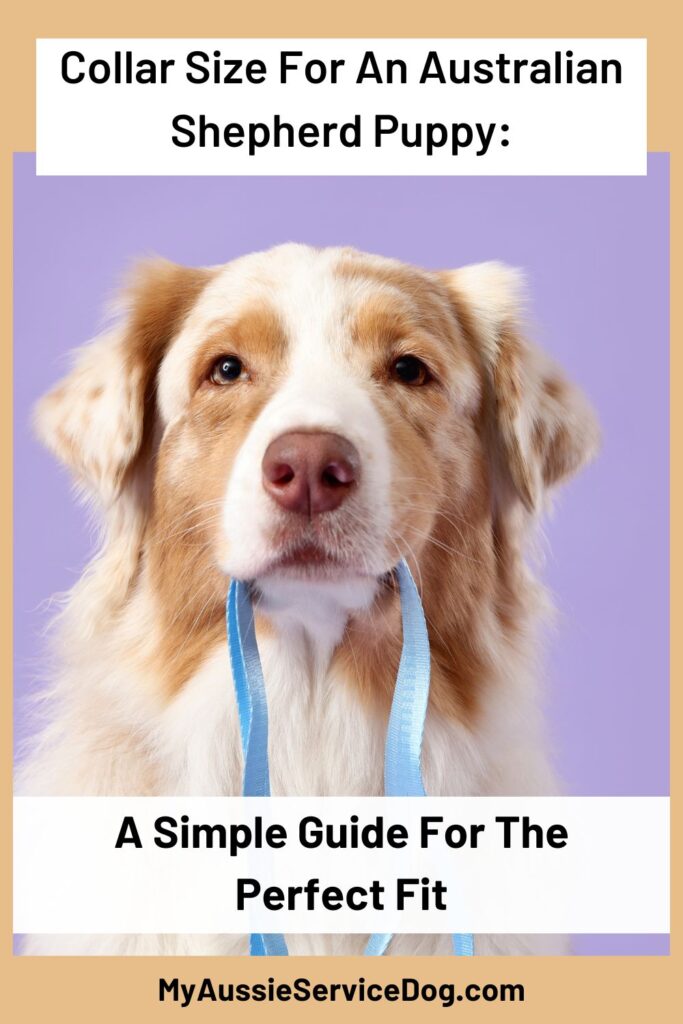
Most Australian Shepherd puppies need a collar that fits a 6 to 10-inch neck, but you should always measure your puppy’s neck to choose the correct size. Growth happens quickly in the first months, so expect to adjust or replace the collar as your puppy fills out. A proper fit should feel snug while still allowing you to slide two fingers between the collar and your puppy’s neck.
When you understand how quickly Aussies grow and how a collar should sit, you avoid common sizing mistakes. With the right approach, you set your puppy up for safe walks, smooth training sessions, and everyday comfort.
Key Takeaways
- Measure your puppy’s neck and use two fingers to check for a safe, snug fit.
- Expect rapid growth and adjust or replace the collar as needed.
- Choose a comfortable, durable collar that supports daily wear and training.
Understanding Australian Shepherd Puppy Growth
Australian Shepherd puppies grow quickly during their first year, and their neck size changes just as fast as their height and weight. When you understand how their body develops from 8 weeks to adulthood, you can choose a collar that fits well at every stage.
Typical Size and Weight Range
Most Australian Shepherd puppies go home at 8 –10 weeks old, weighing about 10–15 pounds. At this age, their neck circumference often falls between 8 and 12 inches, though coat fluff can make it look larger than it is.
By 4–6 months, many Aussies weigh 25–40 pounds. Their neck size commonly increases to 12–16 inches, depending on bone structure and overall build. Males tend to run slightly larger than females.
As adults, Australian Shepherds usually stand 18–23 inches tall and weigh 40–65 pounds. Adult neck size often ranges from 14 to 20 inches.
Because of this wide range, you will likely need:
- One collar size from 2–6 months
- Another size from 6 months to adulthood
Always measure your puppy’s actual neck instead of guessing based on age or weight alone.
Puppy Growth Stages
Australian Shepherd puppies grow in noticeable phases, and each phase affects collar fit.
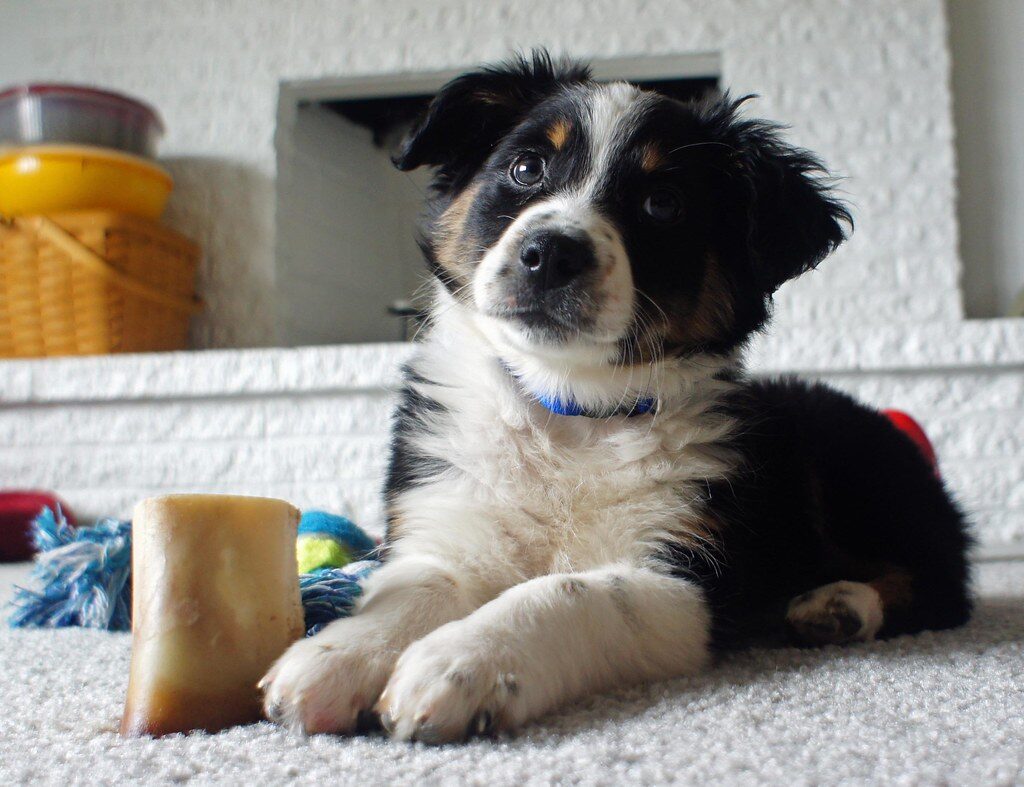
8–12 weeks: Growth is steady but not extreme. Your puppy’s neck thickens gradually, and an adjustable small collar usually works well. Check the fit weekly.
3–6 months: This is a rapid growth period. You may notice sudden increases in height and chest width. Neck size can change within weeks, which often requires resizing or upgrading to a medium collar.
6–12 months: Growth slows but continues. Muscle development increases, especially if your puppy stays active. The neck becomes stronger and more defined, even after height stabilizes.
During these stages, use the two-finger rule: you should fit two fingers comfortably between the collar and your puppy’s neck.
Developmental Milestones
Physical growth does not happen alone. Behavioral development also affects collar needs.
Around 8–16 weeks, your puppy learns leash basics. Lightweight collars reduce strain while your puppy adjusts to gentle pressure.
By 4–6 months, teething peaks. Many puppies scratch at collars during this phase. Choose durable materials and check for irritation under the fur.
Between 6 and 12 months, your Australian Shepherd gains strength and confidence. Increased pulling or high activity levels may make a wider, sturdier collar more appropriate for comfort and control.
As your puppy matures, coat thickness increases, especially around the neck ruff. Measure beneath the fur against the skin to ensure an accurate fit.
Why Collar Size for an Australian Shepherd Puppy Matters
The right collar size affects how your Australian Shepherd puppy breathes, moves, learns, and stays secure. A proper fit supports daily comfort, safer walks, and steady training progress.
Comfort and Safety Considerations
Your Australian Shepherd puppy grows quickly, and their neck size can change within weeks. Many Aussie puppies measure 6–10 inches around the neck, but individual size varies based on age and growth rate.
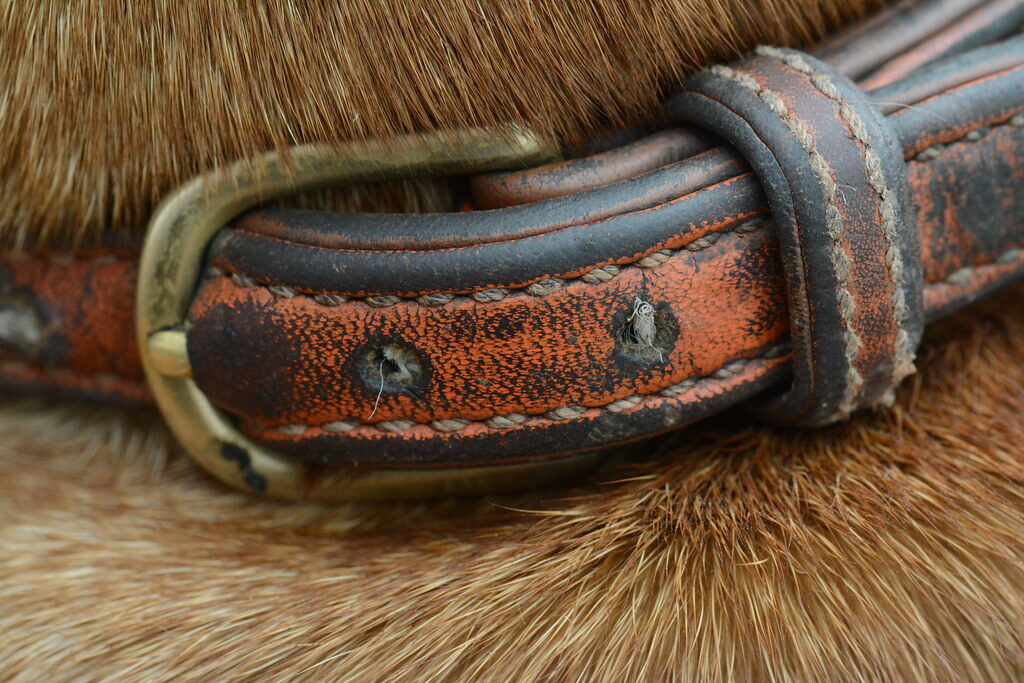
A collar that is too tight can press into thick fur and delicate skin. This pressure may cause rubbing, hair loss, or skin irritation. In severe cases, tight collars can restrict breathing, especially during pulling or excited play.
A collar that is too loose also creates problems. It can slide under the jaw or rotate around the neck, which increases friction and discomfort.
Use the two-finger rule for fit:
- Slide two fingers between the collar and your puppy’s neck
- The collar should feel snug but not tight
- It should not slip over the head without unfastening
Choose an adjustable collar so you can resize it as your puppy grows. Check the fit weekly during rapid growth stages.
Impact on Training and Socialization
You rely on your puppy’s collar for leash training, identification tags, and controlled introductions to new environments. A poor fit interferes with all three.
If the collar shifts or tightens unevenly, your puppy may resist leash pressure. This discomfort can slow early leash training and create negative associations with walks.
A properly fitted collar helps you deliver clear, consistent guidance. When your puppy feels light, even pressure instead of pinching or choking, they respond more calmly.
Collars also hold ID tags. A loose collar may hang too low, making tags noisy or irritating. A snug, well-fitted collar keeps tags in place without constant movement.
During socialization, you need reliable control in parks, vet offices, and training classes. The right size collar gives you steady handling without causing fear or discomfort.
Preventing Injuries and Escape
Australian Shepherd puppies are active and curious. They twist, back up, and pull when something catches their attention.
If the collar is too loose, your puppy can slip out by backing away. This risk increases with fluffy coats that compress under pressure. Escape can happen quickly, especially in busy or unfamiliar places.
A collar that is too tight increases injury risk. Continuous pressure on the throat can strain the trachea. Rough edges or tight buckles can also cause skin sores under thick fur, where problems go unnoticed.
To reduce risk:
- Check for redness under the collar daily
- Remove the collar during crate time if safe
- Replace collars that no longer adjust properly
Correct sizing protects your puppy from avoidable harm while giving you dependable control in real-world situations.
How to Measure Your Australian Shepherd Puppy for a Collar
A properly fitted collar keeps your puppy secure without causing discomfort or restricting growth. Accurate measurements help you choose the right size now and plan for adjustments as your Australian Shepherd grows.
Step-by-Step Measuring Guide
Start by having your puppy stand or sit calmly. If your puppy wiggles, ask someone to gently hold them still without pulling on their neck.
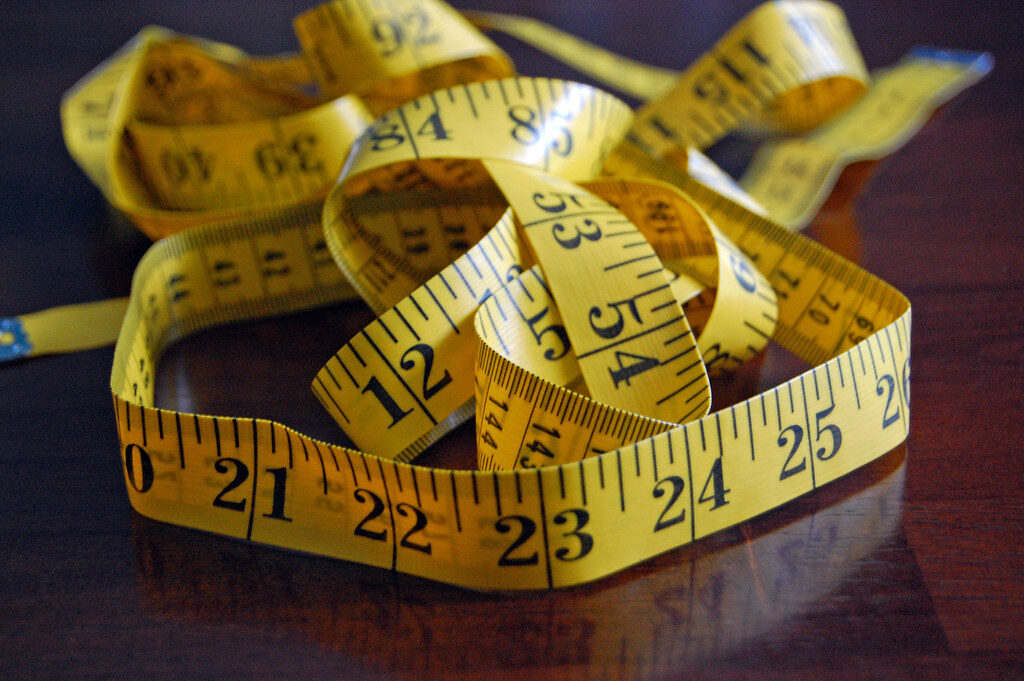
- Wrap a soft measuring tape around the base of your puppy’s neck, where the collar will naturally rest.
- Keep the tape snug but not tight. It should sit flat against the fur.
- Insert two fingers between the tape and your puppy’s neck. This space ensures the collar will not be too tight.
- Note the measurement in inches or centimeters.
If your puppy’s neck measures 10 inches, look for a collar with an adjustable range that includes 10–12 inches.
Always check the brand’s size chart. Collar sizing varies, and weight alone does not guarantee a proper fit.
Tools You Will Need
You only need a few simple items:
- Soft measuring tape (preferred for accuracy)
- String or ribbon (if you do not have tape)
- Rigid ruler or measuring tape (to measure the string)
- Notebook or phone to record measurements
A flexible cloth tape works best because it follows the curve of your puppy’s neck. If you use a string, mark the exact point where it overlaps, then lay it flat against a ruler to measure.
Avoid estimating by breed standards alone. Australian Shepherd puppies vary in size depending on age, genetics, and gender. Direct measurement gives you a better fit than guessing based on weight charts.
Common Measuring Mistakes to Avoid
Do not measure too high on the neck. The collar should sit at the base of the neck, not directly under the jaw.
Avoid pulling the tape too tight. A tight measurement can lead to a collar that rubs, restricts breathing, or causes hair loss. On the other hand, leaving too much space may allow your puppy to slip out.
Do not skip regular re-measuring. Australian Shepherd puppies grow quickly, especially in the first year. Check the fit every few weeks and adjust as needed.
Finally, never rely only on age or weight charts. Use them as rough references, but trust your actual neck measurement when choosing the correct collar size.
Recommended Collar Sizes by Age and Weight
Australian Shepherd puppies grow fast, especially in the first six months. You need a collar that fits their current neck size while leaving room for steady growth, without becoming loose or unsafe.
Collar Size for 8- to 12-Week-Old Puppies
At 8 to 12 weeks, most Australian Shepherd puppies weigh 10 to 20 pounds. Their necks usually measure 8 to 12 inches, depending on build and gender.
In most cases, an extra-small or small adjustable collar works best. Look for a collar with an adjustment range.
- 8–12 inches
- 9–13 inches
Choose lightweight materials like nylon. Heavy hardware can feel bulky on a young puppy and may cause rubbing.
Use the two-finger rule when fitting the collar. You should slide two fingers comfortably between the collar and your puppy’s neck. If you notice flattening fur or coughing when on leash, loosen or resize immediately.
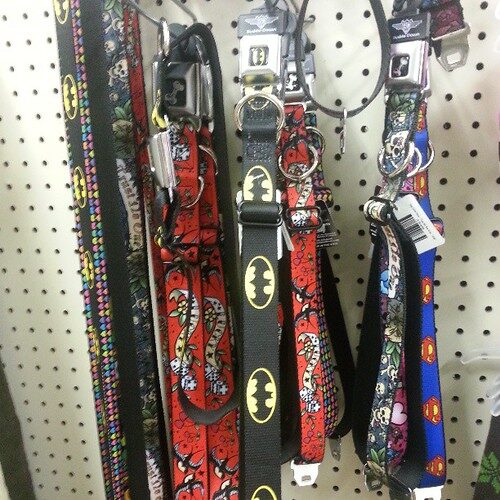
Avoid buying a collar based only on breed charts. Always measure your puppy’s actual neck circumference with a soft tape measure under the fur.
Collar Size for 3- to 6-Month-Old Puppies
Between 3 and 6 months, your Australian Shepherd will likely weigh 20 to 40 pounds. Neck size often increases to 12 to 16 inches during this stage.
Most puppies in this age range need a small or medium collar, typically with an adjustment range.
- 12–16 inches
- 14–18 inches
Australian Shepherds have thick coats, which can make the neck look larger than it is. Measure under the fur to get an accurate number.
This is also when puppies become more active and stronger. Choose a durable collar with sturdy stitching and a secure buckle. If your puppy pulls, consider pairing the collar with a well-fitted harness for walks to reduce neck strain.
Check the fit every two to three weeks. Rapid growth can make a properly fitted collar too tight in a short time.

Adjusting the Collar as Your Puppy Grows
Australian Shepherd puppies continue growing steadily until about 12 months old. Some reach an adult neck size of 16 to 22 inches, depending on weight and genetics.
Plan for at least two to three collar upgrades during the first year. Adjustable collars give you flexibility, but once you reach the largest setting, size up.
Follow these steps each time you check fit:
- Measure the neck using a soft tape measure.
- Add one to two inches for comfort.
- Confirm you can fit two fingers underneath.
Inspect the collar weekly for tightness, fraying, or bent hardware. Regular adjustments keep your puppy comfortable and reduce the risk of skin irritation or escape.
Types of Collars Suitable for Australian Shepherd Puppies
Australian Shepherd puppies grow quickly and remain active, so you need a collar that adjusts easily and withstands daily wear and tear. The right type balances comfort, safety, and control without putting pressure on a developing neck.
Flat Collars
A flat collar works well for everyday wear and ID tags. Most Australian Shepherd puppies fit into adjustable small sizes, often ranging from 10–16 inches, but you should always measure your puppy’s neck and confirm the brand’s size chart.
Look for these features:
- Adjustable nylon or polyester webbing
- Lightweight buckle or quick-release clasp
- Durable D-ring for leash attachment
- Soft or padded lining to reduce friction
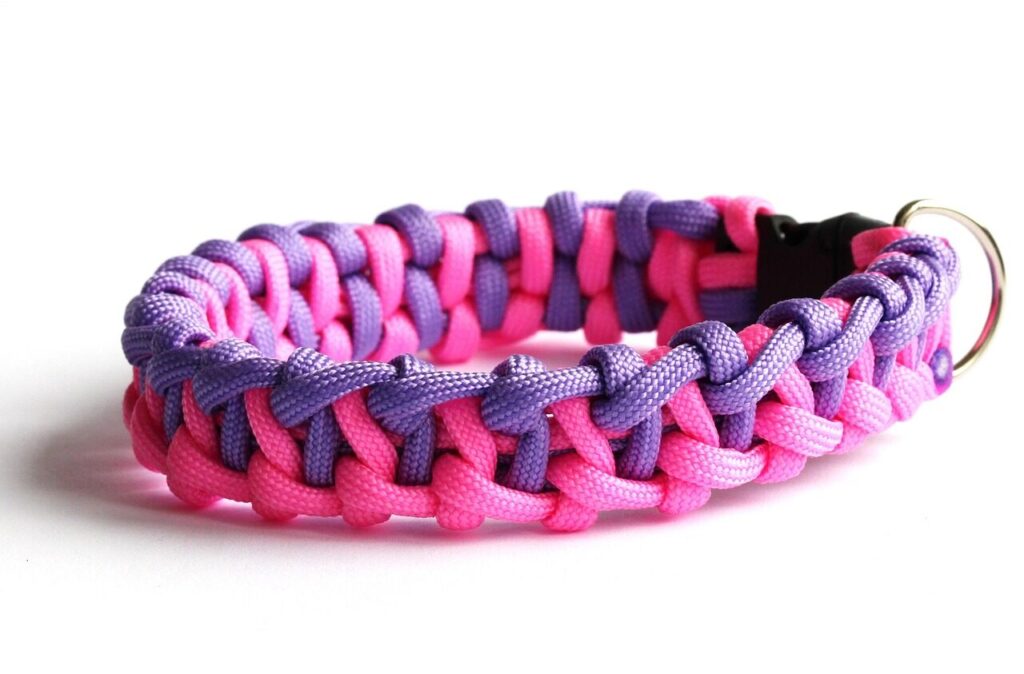
Nylon remains a common choice because it resists moisture and handles rough play. Some brands also offer reflective stitching for better visibility during early morning or evening walks.
You should fit a flat collar using the two-finger rule. Slide two fingers between the collar and your puppy’s neck. If you cannot do that comfortably, loosen it. If it slides over the head, tighten it.
Flat collars suit puppies who walk calmly and respond well to early leash training.
Breakaway Collars
Breakaway collars release under pressure. A safety buckle pops open if the collar catches on a crate wire, fence, or branch.
This feature reduces the risk of choking during unsupervised time. Australian Shepherd puppies often explore tight spaces, so this design adds an extra layer of protection indoors or in secure yards.
However, breakaway collars do not work well for leash walking. The same safety release can trigger if your puppy pulls suddenly.
Use a breakaway collar primarily for:
- Supervised indoor wear
- Attaching ID tags
- Puppies who spend time in crates or playpens
If you walk your puppy outside, switch to a standard flat collar or harness for better leash security.
Martingale Collars
A martingale collar tightens slightly when your puppy pulls, then loosens when tension stops. It prevents slipping out without choking when fitted correctly.
Some martingale designs for medium breeds adjust within ranges like 14–21 inches, but most Australian Shepherd puppies need smaller versions. Always check width and adjustability.
Key benefits include:
- Gentle tightening for better control
- Reduced risk of backing out of the collar
- Even pressure distribution when properly sized
You must size this collar carefully. It should sit high on the neck and tighten only enough to prevent escape. It should never remain tight at rest.
Martingales work best for puppies who already show strong pulling behavior or who have narrow heads that slip out of flat collars.
Harness vs. Collar Options
Australian Shepherd puppies often pull because of their energy and curiosity. A harness spreads pressure across the chest and shoulders instead of the neck.
Front-clip harnesses help redirect pulling by guiding your puppy toward you. Back-clip harnesses feel more comfortable for casual walks but provide less steering control.
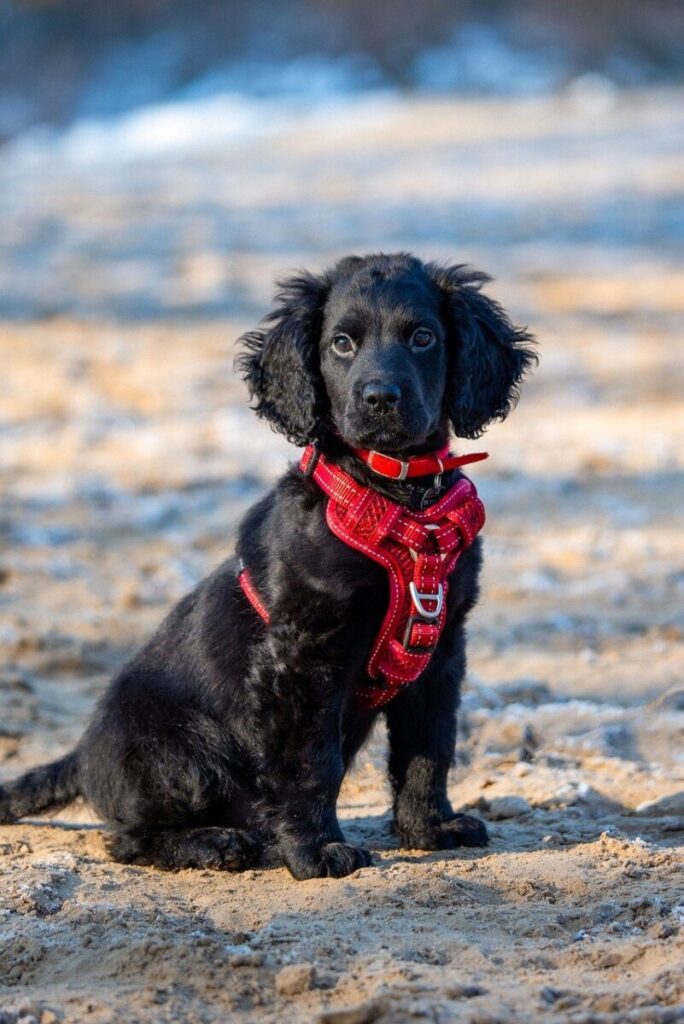
Choose a harness if your puppy:
- Pulls consistently on the leash
- Coughs or gags with neck pressure
- Participates in longer walks or training sessions
You can still use a flat collar for identification while relying on a harness for walking. Many owners combine both to balance safety and comfort as their puppy grows.
Tips for Choosing the Best Collar Material
The right material affects your puppy’s comfort, skin health, and how long the collar lasts. Focus on durability, weight, breathability, and how easy the collar is to clean.
Nylon and Fabric Collars
Nylon collars work well for most Australian Shepherd puppies because they are lightweight, adjustable, and affordable. Since Aussies grow quickly, you need a collar that adjusts easily without losing shape.
Look for tightly woven nylon with reinforced stitching. Weak stitching can fray fast, especially if your puppy pulls or plays roughly.
Advantages of nylon and fabric collars:
- Easy to clean and quick to dry
- Available in many widths and sizes
- Comfortable for everyday wear
- Usually water-resistant
If your puppy loves water or gets muddy often, nylon makes cleanup simple. You can rinse or machine-wash most fabric collars.
Check the edges carefully. Rough or stiff edges can rub against your puppy’s neck and cause irritation, especially on longer-coated Aussies. Choose a smooth finish and a lightweight buckle to reduce pressure on a small neck.
Leather Collars
Leather collars offer durability and a classic look, but they require more care. If you choose leather, select soft, flexible leather, not stiff or overly thick material.
Australian Shepherd puppies have sensitive skin, so stiff leather can cause rubbing. A padded leather collar can help prevent chafing during walks.
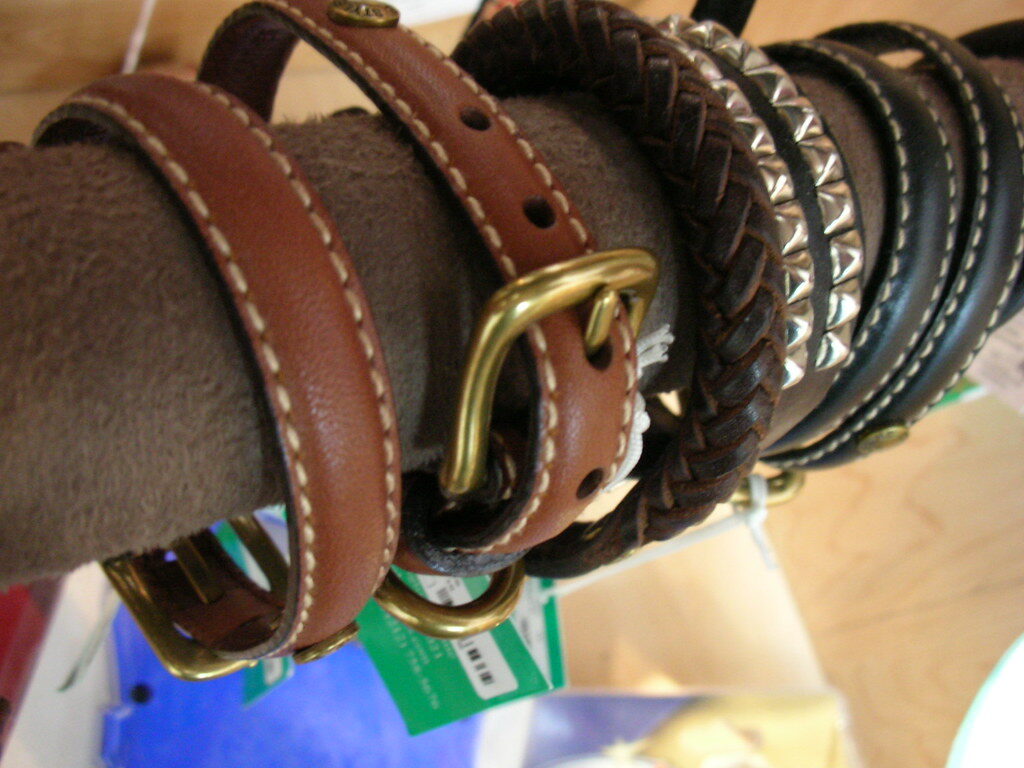
Benefits of leather include:
- Strong and long-lasting
- Less likely to fray compared to fabric
- Can soften over time with proper care
Keep in mind that leather absorbs water. If your puppy swims or plays in the rain, the collar may stiffen or crack without conditioning.
Wipe leather clean and use a conditioner periodically to keep it supple. Make sure metal hardware is rust-resistant, especially if your puppy is active outdoors.
Eco-Friendly Materials
Eco-friendly collars use materials like recycled plastic fibers, organic cotton, or hemp. These options reduce environmental impact while still providing daily function.
Hemp collars stand out for being naturally breathable and resistant to odors. That helps if your puppy sweats or gets damp during active play.
Recycled polyester collars feel similar to standard nylon but reuse existing materials. Look for strong stitching and sturdy buckles, just as you would with traditional fabric collars.
Before buying, check:
- Durability of hardware
- Washability
- Adjustability for growth
An eco-friendly label does not guarantee comfort. Run your fingers along the inside of the collar to make sure the texture feels smooth and flexible against your puppy’s neck.
Fitting the Collar Properly
A properly fitted collar keeps your Australian Shepherd puppy safe without causing discomfort. You need enough room for movement and growth, but not so much that your puppy can slip free.
The Two-Finger Rule
Start by placing the collar high on your puppy’s neck, just below the ears. This position gives you better control during leash training and prevents the collar from sliding down toward the shoulders.
Use the two-finger rule to check the fit. Slide two fingers flat between the collar and your puppy’s neck.
- If you cannot fit two fingers under the collar is too tight.
- If you can fit more than two fingers easily, it is likely too loose.
Your fingers should fit snugly, not loosely. The collar should sit flat against the fur without pressing into the skin. Because Australian Shepherd puppies have fluffy coats, part the fur slightly when checking the fit so you measure against the neck, not just the hair.
Signs the Collar Is Too Tight or Too Loose
A tight collar can irritate and restrict breathing. Watch for redness, hair loss, coughing, or constant scratching around the neck area.
You may also notice indentations in the fur after removing the collar. Deep marks or skin irritation mean you need to loosen it immediately.
A loose collar creates a different set of problems. Your puppy may:
- Slip out when backing up
- Catch the collar on objects
- Chew on the dangling strap
If the collar rotates easily around the neck or slides over the ears, it is too loose. A secure collar stays in place without constant shifting.
Adjusting for Growth Spurts
Australian Shepherd puppies grow quickly, especially during the first six to twelve months. A collar that fits well this month may feel tight in just a few weeks.
Check the fit at least once a week during rapid growth stages. For very young puppies, check every few days.
Use adjustable collars with multiple holes or a sliding buckle so you can expand the size gradually. Avoid buying a collar that is much too large just to “grow into,” since this increases the risk of slipping out.
When your puppy moves up to the last adjustment hole and still needs more room, replace the collar with the next size up.
When and How to Replace Your Puppy’s Collar
Your Australian Shepherd puppy will outgrow collars quickly during the first year. You also need to replace a collar if it shows damage or no longer fits your dog’s size and strength.
Outgrowing the Current Collar
Australian Shepherd puppies grow fast, especially between 8 weeks and 8 months. A collar that fit last month may already feel tight.
Check the fit every 1–2 weeks. You should be able to slide two fingers comfortably between the collar and your puppy’s neck. If you struggle to fit two fingers or notice indent marks in the fur, the collar is too tight.
Watch for these signs:
- The collar sits high and snug without sliding slightly.
- Your puppy scratches at it more than usual.
- The buckle sits at the last adjustment hole.
- You cannot loosen it further.
Most Aussie puppies start in a collar around 8–12 inches in length. Many move up a size by 4–6 months. Measure your puppy’s neck with a soft tape measure and compare it to the brand’s size chart before buying a replacement.
Never wait until the collar looks obviously tight. A snug collar can cause skin irritation and hair loss.
Wear and Tear Signs
Even if the collar still fits, replace it when it shows damage. Active breeds like Australian Shepherds put stress on their gear.
Inspect the collar weekly, especially if your puppy plays outdoors or attends training classes.
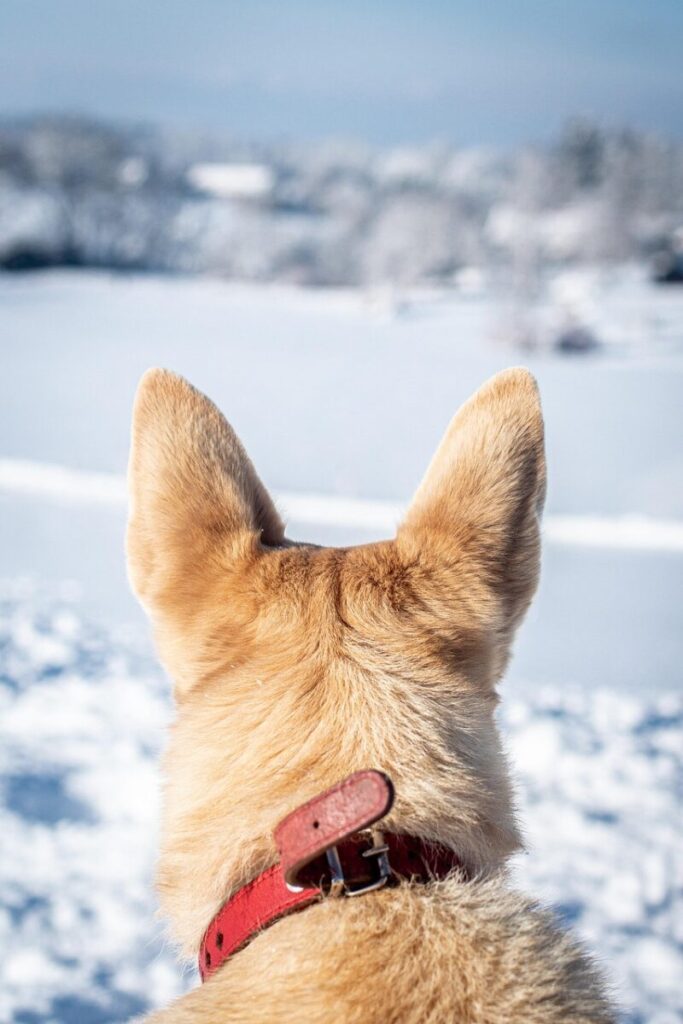
Look for:
- Frayed nylon or loose stitching
- Cracked plastic buckles
- Bent or rusted metal hardware
- Stretched fabric that no longer holds adjustment
- Faded ID tag loops that look thin
Pull gently on the collar and buckle to test strength. If it feels weak or slips under light pressure, replace it immediately.
Dirt buildup can also weaken fibers. Wash fabric collars regularly according to the manufacturer’s instructions. If the material stays stiff or rough after cleaning, it may irritate your puppy’s neck.
A damaged collar can break during a walk. Replace it before that risk becomes real.
Upgrading for Adult Size
As your Australian Shepherd approaches adult size, usually between 10 and 14 months, switch from a lightweight puppy collar to a sturdier adult version.
Adult Aussies typically need collars in the 14–20 inch range, though you should always measure your dog’s actual neck size. Choose a collar width that matches your dog’s build:
| Neck Size | Suggested Width |
|---|---|
| Under 14 inches | ½–¾ inch |
| 14–18 inches | ¾–1 inch |
| Over 18 inches | 1 inch |
A slightly wider collar distributes pressure more evenly, which helps during leash training.
Choose durable materials like strong nylon or leather with metal hardware. Make sure the collar still allows the two-finger rule and sits comfortably at the middle of the adjustment range so you have room for minor weight changes.
Keep your dog’s ID tags updated when you switch collars.
Personalization and Identification Ideas
Your Australian Shepherd puppy’s collar should do more than fit well. It should clearly identify your pup if they slip out of the yard or pull free on a walk.
Start with a durable ID tag attached to the collar’s D-ring. Choose stainless steel or brass for everyday wear, since both resist rust and scratches.
Include clear, simple details:
- Your puppy’s name
- Your primary phone number
- Optional: a second phone number or “Microchipped”
If you prefer a quieter option, consider a slide-on tag or a collar with embroidered contact information. These reduce the jingling sound that some puppies find distracting.
You can also match personalization to your puppy’s size and growth stage:
| Option | Best For | Why It Helps |
|---|---|---|
| Engraved metal tag | Daily wear | Easy to read and widely recognized |
| Slide-on tag | Active puppies | Stays secure during play |
| Embroidered collar | Growing pups | No dangling parts to snag |
Keep the text large enough to read at a glance. Avoid overloading the tag with too much information.
As your puppy grows and you adjust collar size, double-check that the tag remains secure and legible. A well-fitted collar with clear identification gives you added peace of mind during training, walks, and outdoor play.
Training Your Australian Shepherd Puppy to Wear a Collar
Start introducing the collar when your puppy feels calm and relaxed. Let your puppy sniff it first, then gently place it around their neck without fastening it.
Keep the first few sessions short. Clip the collar on for 1–2 minutes, then remove it and offer praise or a small treat.
Many Australian Shepherd puppies scratch at the collar at first. Stay calm and redirect their attention with a toy or simple cue like “sit.” Avoid removing the collar while they fuss, or they may learn that scratching makes it come off.
Use this simple progression:
- Day 1–2: Wear indoors for a few minutes at a time
- Day 3–5: Increase to 10–15 minutes during play
- After 1 week: Supervised wear for longer periods
Always check the fit before each session. You should be able to slide two fingers comfortably between the collar and your puppy’s neck.
Pair the collar with positive experiences. Feed meals, play games, or practice short training sessions while your puppy wears it.
Keep the mood light and encouraging. Your consistency helps your puppy see the collar as a normal and comfortable part of daily life.
Common Mistakes to Avoid When Choosing Collar Size For An Australian Shepherd Puppy
Choosing the wrong collar size often starts with guessing instead of measuring. Always use a soft tape measure around your puppy’s neck rather than relying on breed averages or weight charts alone.
Many owners forget to use the two-finger rule. You should be able to slide two fingers comfortably between the collar and your puppy’s neck to prevent rubbing or choking.
Another common mistake is ignoring growth. Australian Shepherd puppies grow quickly, so a collar that fits today may feel tight in a few weeks.
Watch out for these sizing errors:
- Picking a size based only on age
- Buying a collar without checking the adjustable range
- Skipping a fit check after putting it on
- Choosing a collar that is too wide for a small puppy
You also want to avoid collars that sit too loosely. A loose collar can slip over your puppy’s head, especially if they pull backward on the leash.
Use this quick reference when checking fit:
| Issue | What Happens | What You Should Do |
|---|---|---|
| Too tight | Fur marks or coughing | Loosen until two fingers fit |
| Too loose | Collar slides over head easily | Tighten slightly and recheck fit |
| Not adjustable | Outgrown quickly | Choose a wider adjustment range |
Take a minute to recheck the fit every couple of weeks. Small adjustments help keep your puppy safe and comfortable.
Frequently Asked Questions About Collar Size For An Australian Shepherd Puppy
You need accurate neck measurements, an understanding of growth stages, and a clear idea of breed size to choose the right collar. Australian Shepherd puppies grow quickly, so fit and adaptability matter from the first weeks onward.
How do I determine the right collar size for an 8-week-old Australian Shepherd puppy?
Use a soft measuring tape and wrap it around your puppy’s neck where the collar will sit. Place two fingers between the tape and your puppy’s neck to ensure a comfortable fit.
Most 8-week-old Australian Shepherd puppies have a neck size of about 8 to 12 inches. An adjustable collar labeled extra-small or small usually works, as long as it covers that range.
Check the fit weekly. Puppies grow fast at this stage.
Can you recommend a collar size for a 10-week-old Labrador puppy that might also fit an Australian shepherd of the same age?
At 10 weeks, many Labrador and Australian Shepherd puppies have neck sizes between 9 and 13 inches. A small adjustable collar that fits roughly 9 to 14 inches often suits both breeds at that age.
Keep in mind that Labradors may outgrow the collar sooner due to their heavier bone structure. Always measure your own puppy instead of relying only on breed comparisons.
What are the neck size ranges for Australian Shepherd puppies?
Australian Shepherd puppy neck sizes typically fall into these ranges:
- 8–12 inches at 8–10 weeks
- 10–14 inches at 3–4 months
- 12–16 inches at 5–6 months
By adulthood, many Australian Shepherds measure 14–20 inches, depending on sex and build.
These numbers vary, so treat them as guidelines and confirm with a fresh measurement.
At what age should I size up my Australian Shepherd puppy’s collar?
Size up when you can no longer fit two fingers comfortably under the collar. You might also notice redness, flattened fur, or tightness after activity.
Many Australian Shepherd puppies need a larger collar around 4 to 6 months of age. Some will go through two collar sizes before reaching adulthood.
Check the fit every one to two weeks during growth spurts.
Are Australian Shepherds considered a medium or a large breed when selecting a collar?
Australian Shepherds are generally considered a medium-sized breed. Adult dogs typically weigh between 40 and 65 pounds.
When selecting a collar, most adult Aussies wear a medium, though larger males may need a large depending on neck circumference. Focus on neck measurement rather than the breed label on the packaging.
Where can I find a puppy collar size chart that includes Australian Shepherds?
You can find collar size charts on pet supply retailer websites, breed-focused resources, and manufacturer product pages. Many charts list size ranges in inches and recommend sizes based on neck circumference.
Look for charts that include adjustable ranges rather than fixed sizes. Use your puppy’s exact neck measurement to match it to the chart instead of choosing by breed alone.