Australian Shepherd Colors: A Friendly Guide to Every Shade
Australian Shepherd colors grab your attention right away. From striking merle patterns to rich, solid coats, you see a wide range of looks in this energetic herding breed. If you plan to bring one home, coat color often plays a big role in your decision.

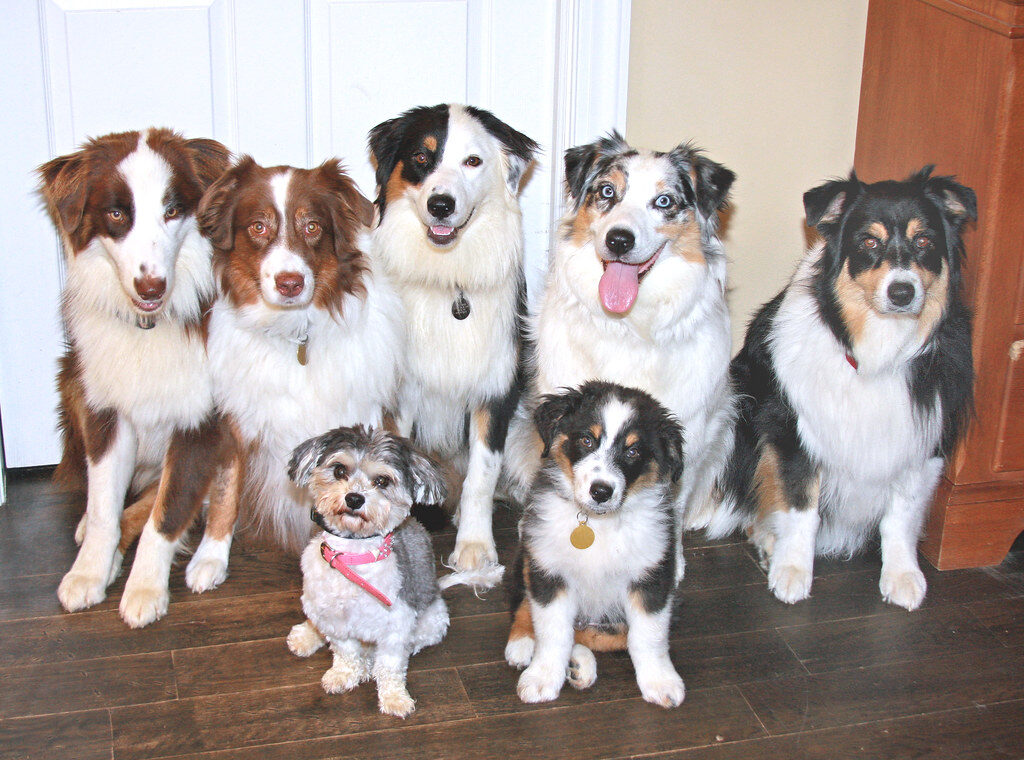
Australian Shepherds come in four standard colors: black, red, blue merle, and red merle, often combined with white and tan markings. Within those categories, you’ll find tri-color, bi-color, and solid variations, along with different eye colors that can include brown, blue, amber, or even two different eyes.
As you explore these options, you’ll also notice rare shades, unique markings, and important health considerations linked to certain genes, especially merle. Understanding how color works helps you choose confidently and focus on what truly matters in your future companion.
Key Takeaways
- Australian Shepherds have four main coat colors with several pattern variations.
- Merle patterns create mottled coats and can affect eye color and health.
- Coat color does not determine personality, but genetics can influence health factors.
Overview of Australian Shepherd Colors
Australian Shepherds come in four recognized base colors, but genetics creates many variations within those groups. When you understand how coat color genes and markings work, you can better identify what makes your Aussie’s coat unique.
Genetics Behind Coat Colors
Your Australian Shepherd’s coat color starts with four primary base colors: black, red, blue merle, and red merle. The American Kennel Club recognizes these as the standard foundation colors for the breed.
Two main pigment types control coat color.
- Eumelanin – produces black pigment
- Pheomelanin – produces red pigment
A black-based dog can appear solid black, black with white and tan trim (tri-color), or black with white only (bi-color). A red-based dog shows the same pattern options but with brown pigment instead of black.
The merle gene creates the mottled or marbled pattern seen in blue merle and red merle Aussies. It dilutes random sections of the base color, which gives that patchy, speckled look. Because the merle gene affects pigment, it can also influence eye color and nose pigmentation.
Color inheritance follows predictable genetic patterns, so responsible breeders test breeding pairs to avoid health risks linked to certain gene combinations, especially double merle pairings.
Standard vs. Non-Standard Colors
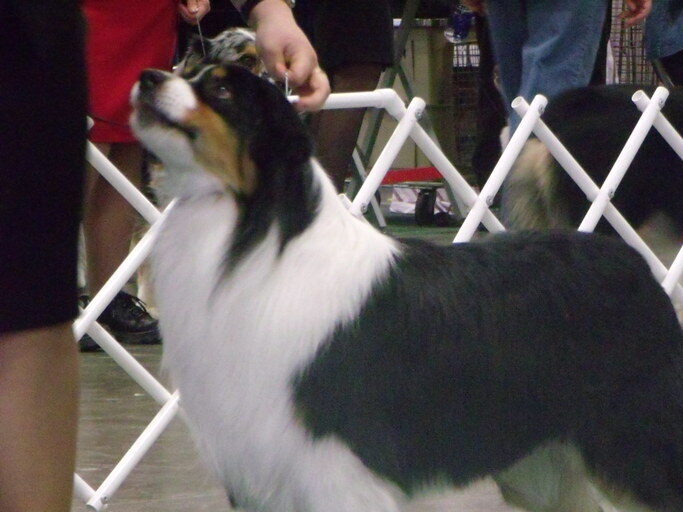
Breed standards define which colors qualify for show competition and official registration categories. For Australian Shepherds, the AKC recognizes the following colors.
- Black
- Red
- Blue merle
- Red merle
Each of these may include white markings, copper (tan) points, or both, creating combinations such as black tri, red bi, or blue merle tri.
You may also see Aussies advertised in “rare” colors, such as solid black with no white or minimal markings. While solid black does occur, most Aussies display at least some white or tan markings.
Non-standard colors do not automatically mean the dog is unhealthy or impure. However, if a color falls outside the recognized base groups, you should confirm lineage and registration if breed standards matter to you.
Color Terminology Explained
Understanding common color terms helps you accurately describe your dog.
Tri-color (Tri):
Your dog has a base color plus white and copper (tan) points. For example, a black tri includes black, white, and tan.
Bi-color (Bi):
Your Aussie has a base color with white but no copper points.
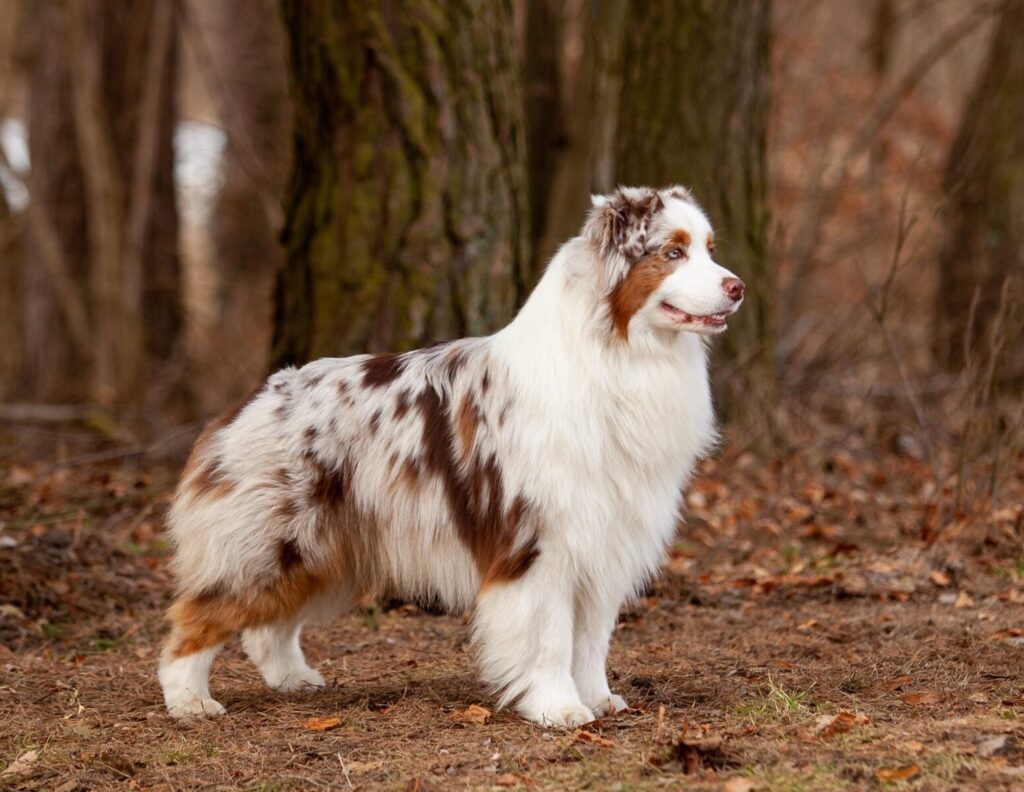
Merle:
A marbled pattern that appears over either a black base (blue merle) or a red base (red merle).
Copper points:
Tan markings typically appear above the eyes, on the cheeks, chest, and legs.
White trim:
White markings often appear on the face blaze, collar, chest, legs, and tail tip.
When you use these terms together, such as “red merle tri,” you describe both the base color and the presence of white and copper markings in a clear, accurate way.
Merle Patterns in Australian Shepherds
Merle coats create a marbled pattern that sets many Australian Shepherds apart. You will see this effect most clearly in blue merle and red merle dogs, each with distinct pigment and eye color traits.
Blue Merle Traits
A blue merle Australian Shepherd has a mix of gray, black, and white fur arranged in a mottled or marbled pattern. The base color is black, which the merle gene dilutes into lighter gray patches.
You may also see tan (copper) points above the eyes, on the cheeks, chest, and legs. White markings often appear on the face, collar, chest, and paws.
Eye color varies widely. Many blue merles have blue eyes or heterochromia (two different colored eyes), while others have brown or amber eyes.
Here are common features you might notice.
- Gray and black marbling
- Black nose and eye rims
- Possible copper trim
- Blue, brown, or split eye colors
Each coat pattern looks different. No two blue merles have identical markings.

Red Merle Variations
A red merle Australian Shepherd has a liver (red) base color instead of black. The merle gene lightens parts of that red coat into cream or lighter red patches.
You will often see white markings and copper points similar to those on blue merles. However, the nose, lips, and eye rims usually show liver pigmentation, not black.
Eye color can include:
- Amber or light brown
- Blue
- Greenish tones
- Marbled or split colors
Some breeders and owners consider red merle less common than blue merle, but availability depends on bloodlines and region. Coat shade can range from deep red to lighter cinnamon tones, so individual dogs may look quite different even within the same color category.
Double Merle Risks
A double merle results when you breed two merle-patterned dogs together. The puppy inherits two copies of the merle gene, which significantly increases health risks.
These dogs often have large areas of white coat. More importantly, they face a higher chance of certain conditions.
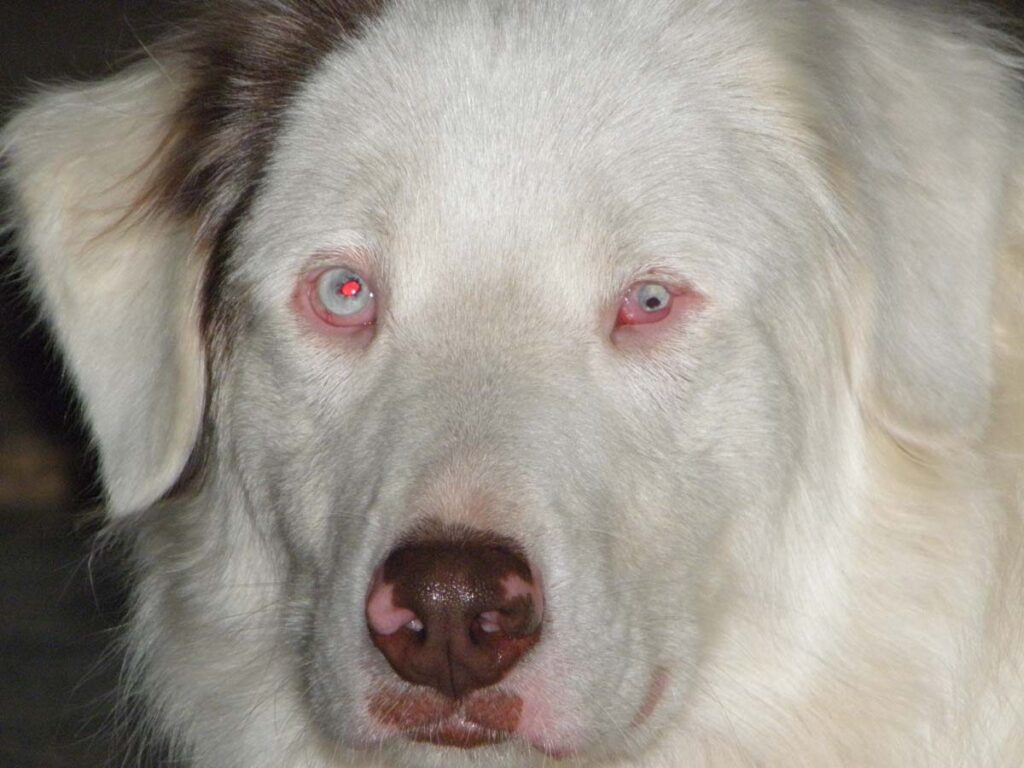
- Hearing loss (partial or complete)
- Vision problems, including microphthalmia
- Increased sensitivity to light
Responsible breeders avoid merle-to-merle pairings to reduce these risks. If you consider adopting a merle Australian Shepherd, ask about the parents’ coat genetics and health testing so you understand your dog’s background.
Solid and Bi-Color Australian Shepherds
Solid and bi-color Australian Shepherds highlight the breed’s core colors without the marbling seen in merles. You will see strong black or red coats, sometimes paired with crisp white markings or defined copper points.
Black Australian Shepherds
A solid black Australian Shepherd has a uniform black coat that may appear glossy in good light. According to breed standards, black is one of the four recognized base colors. You may see black dogs with or without white markings and with or without tan (copper) points.
Black Aussies have black pigmentation on the nose, lips, and eye rims. Their eyes are often brown, but some may have blue or partially blue eyes.
You can also find black in different patterns.
- Solid black (no white or copper)
- Black with white markings
- Black with copper points
- Black tri-color (black, white, and copper)
If you prefer a bold, high-contrast look, black coats tend to make white collars and facial blazes stand out clearly.
Red Australian Shepherds
A solid red Australian Shepherd carries a liver-colored coat that ranges from light cinnamon to deep dark chocolate. Breed standards recognize red (also called liver) as a primary color, with or without white markings and copper points.
Red Aussies have liver pigmentation on the nose, lips, and eye rims instead of black. Their eye color often falls in the amber or brown range, which complements the coat tone.
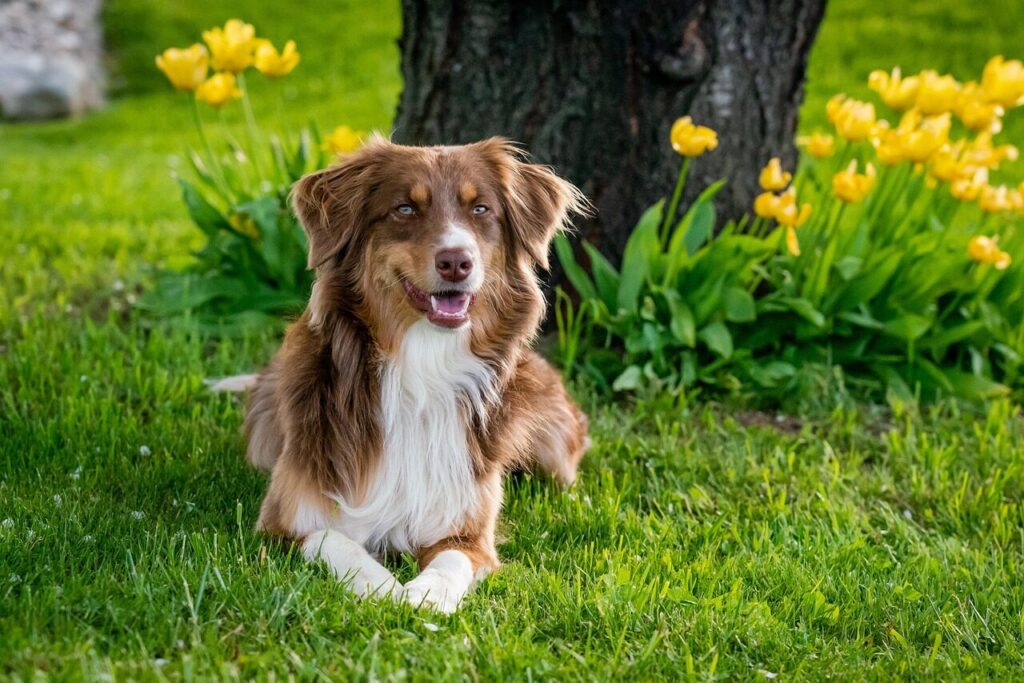
You may see several variations:
- Solid red
- Red with white markings
- Red with copper points
- Red tri-color (red, white, and copper)
If you want a warmer-toned coat without merle patterning, solid red offers a rich, even appearance that still meets breed standards.
Bi-Color Combinations
A bi-colored Australian Shepherd displays two colors rather than three. This usually means a base color (black or red) paired with white or copper, but not both.
Common bi-color combinations include:
- Black and white
- Black and copper
- Red and white
- Red and copper
In black bicolors, pigmentation stays black on the nose and eye rims. In red bi-colors, pigmentation remains liver. White markings often appear on the chest, legs, face, or collar.
Bi-colors give you a clean, defined look without the added contrast of tri-color copper or the mottled merle pattern. If you prefer a simpler coat pattern while keeping the breed’s classic colors, bi-color Aussies offer a balanced option.
Tri-Color Australian Shepherds
Tri-color Australian Shepherds carry three distinct coat colors in clearly defined patterns. You will most often see black, red, white, and copper arranged in predictable placements on the face, chest, and legs.
Black Tri-Color
A Black Tri-Color Australian Shepherd has a black base coat with white and copper (tan) markings. Black usually covers most of the body, including the back and sides.
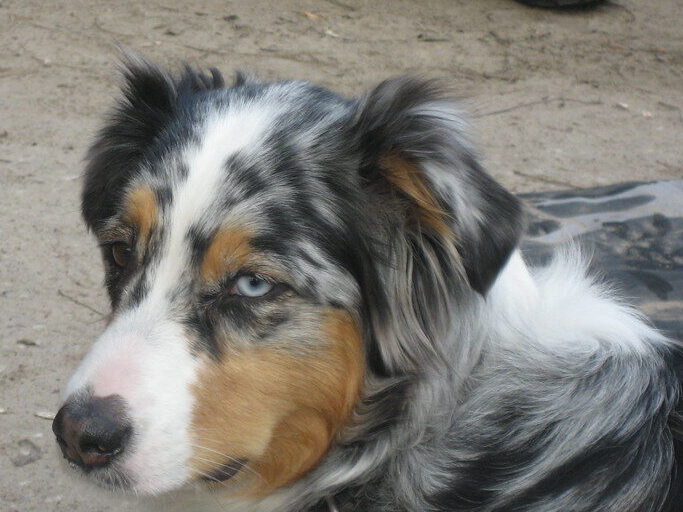
White commonly appears on the chest, muzzle, blaze, collar, and lower legs. Copper points show up above the eyes, on the cheeks, inside the ears, and on the legs.
This is one of the most common Aussie color patterns recognized by the American Kennel Club. The coat may be straight or slightly wavy and ranges from medium to long in length.
You might also notice variation in white trim. Some dogs have broad white collars and facial blazes, while others show minimal white. Eye color ranges from brown to blue, and some dogs have one of each.
Red Tri-Color
A Red Tri-Color Australian Shepherd features a red (liver) base coat paired with white and copper markings. The red can range from a deep liver brown to a lighter cinnamon shade.
White markings appear in similar locations as in black tris—chest, legs, face, and sometimes a full or partial collar. Copper points typically sit above the eyes, on the cheeks, and along the legs.
Red tri Aussies often have amber, brown, or blue eyes. Their noses and eye rims match the liver base color rather than black.
Genetically, red is recessive, so both parents must carry the gene for a puppy to be red tri. This does not affect temperament or working ability, only pigment.
Copper and White Markings
In tri-color Aussies, copper and white markings follow specific patterns rather than appearing randomly. These markings create the distinct “points” that define the tri look.
Copper points typically appear in these areas:
- Above the eyes
- On the cheeks and sides of the muzzle
- On the lower legs
- Under the tail
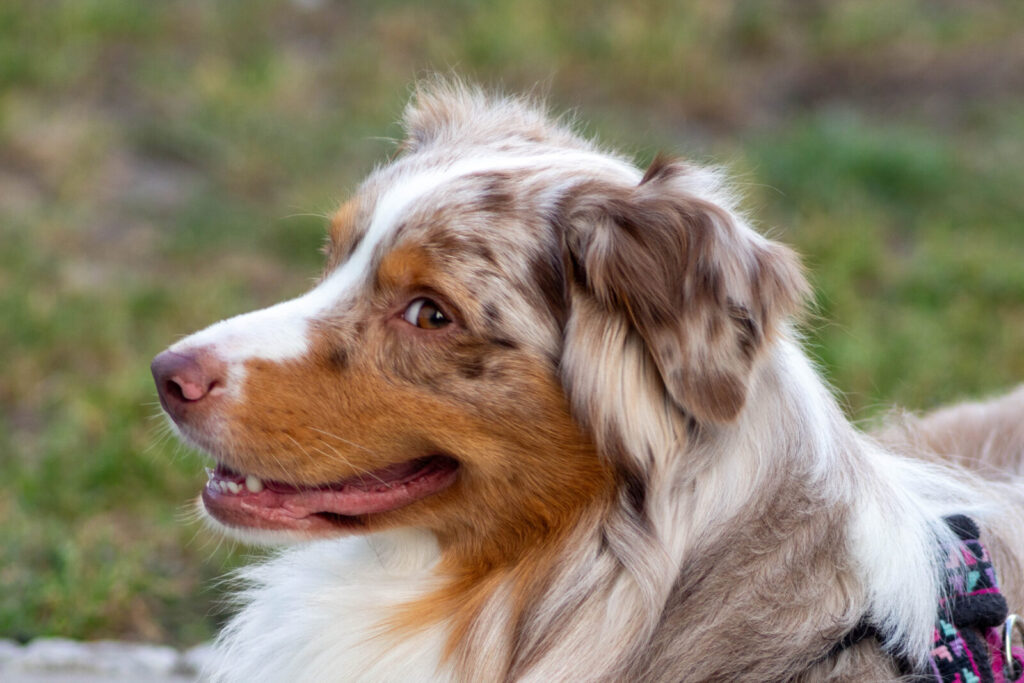
White usually appears on the chest, neck, muzzle, and paws. Breed standards limit how far white can extend over the body, especially around the eyes and ears.
The contrast between the base coat and these markings gives tri-color Australian Shepherds their sharp, balanced appearance. When you look at a well-marked tri, you can clearly see each color separated and defined.
Uncommon and Rare Australian Shepherd Colors
Some Australian Shepherd coat colors fall outside the four standard colors—black, red, blue merle, and red merle—recognized by major breed standards. These uncommon shades often result from recessive genes, dilution genes, or combinations that breeders do not typically select for in conformation programs.
Dilute Color Variations
Dilute Australian Shepherds carry a recessive dilution gene (d locus) that lightens black or red pigment. When dilution affects black, you get a soft gray often called blue dilute or slate. When it affects red, the coat appears pale brown or beige, sometimes referred to as red dilute or lilac.
These dogs may still have white markings and tan points, but the base color looks washed out compared to standard coats. The nose and eye rims often appear lighter as well.
Dilution does not automatically mean poor health. However, in some breeds, the dilute gene links to Color Dilution Alopecia (CDA), a condition that can cause hair thinning. Reputable breeders test breeding dogs and monitor coat quality to reduce risk. If you are considering a dilute Aussie, ask for health screening records and clear photos of the parents’ coats.
Yellow and Sable Coats
Yellow and sable coats appear occasionally but do not meet standard color descriptions for the breed. A yellow coat ranges from cream to golden and lacks the rich red tone expected in red Australian Shepherds.
Sable Aussies show individual hairs banded with multiple colors, usually with darker tipping over a lighter base. This pattern can resemble certain Collie-type breeds, which share ancestry in herding lines.
Because sable and yellow fall outside the recognized colors, most kennel clubs do not accept them in conformation shows. You may still see them in working or companion lines.
If you want one of these coats, confirm that the dog is purebred and not the result of an intentional cross. Review registration papers and pedigree details carefully.
Non-Recognized Colors
Some colors appear due to rare genetic combinations or crossbreeding and are not accepted under breed standards.
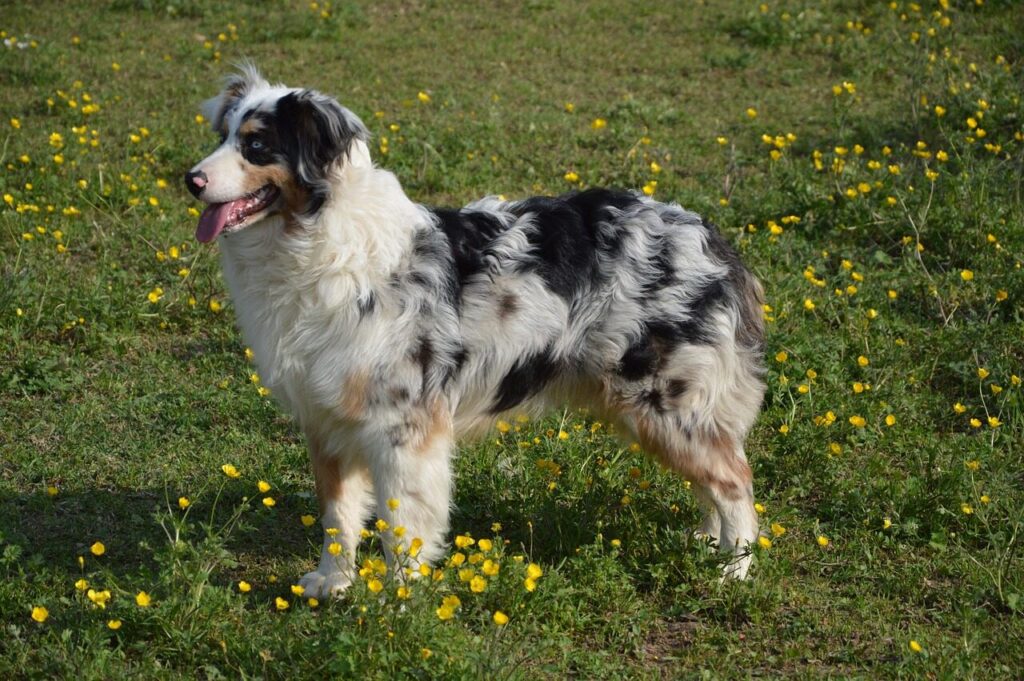
- Solid white (extreme white)
- Brindle
- Bi-color patterns outside standard combinations
- Unusual shades are marketed as “champagne” or “platinum.”
Solid white Aussies raise particular concern. When excessive white links to double merle breeding, puppies face a higher risk of hearing or vision impairment.
Color alone does not define quality, but ethical breeding does. If you encounter a rare shade advertised at a premium price, focus on health testing, temperament, and genetic background rather than the novelty of the coat.
Markings and Distinctive Features
Australian Shepherd colors gain much of their character from specific markings and contrast points. When you look at an Aussie, white trim and copper accents often define the expression as much as the base coat color.
White Markings Patterns
White markings create the classic “Irish spotting” look that many people expect in an Australian Shepherd. You will usually see white on the muzzle, blaze, chest, neck (collar), belly, and legs.
A full white collar wraps around the neck, while a partial collar only covers part of it. Some dogs have a narrow blaze between the eyes, and others show a wide facial stripe that extends down the muzzle.
Common white areas include:
- Chest and lower neck
- Front legs and hind feet
- Muzzle and blaze
- Tip of the tail
Breed standards typically limit white to specific areas. Large white patches across the body or back fall outside the preferred pattern, even if the dog is purebred.
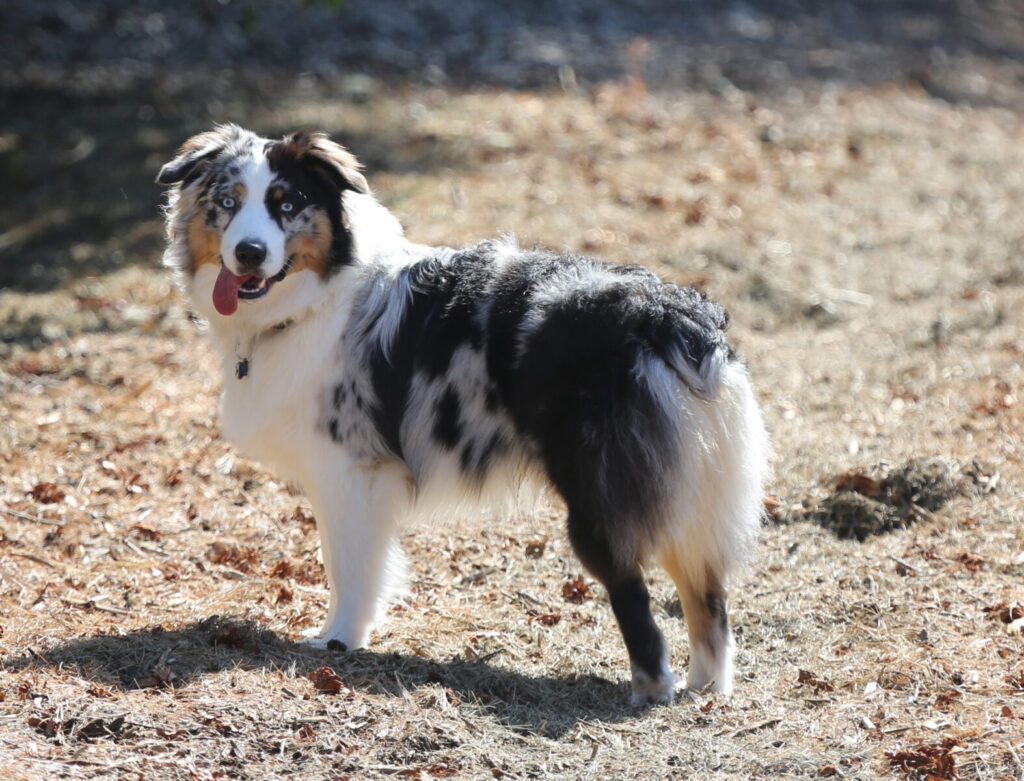
White markings do not change the base color. A blue merle with white trim and a black with white trim differ genetically, even if the white areas look similar.
Tan and Copper Points
Tan, often called copper points, adds contrast and sharp definition to an Aussie’s face and legs. You will most often see them on black and blue merle dogs, though red and red merle Aussies can carry lighter copper shades.
Copper points usually appear in certain places on your Aussie.
- Above the eyes (small “eyebrows”)
- On the cheeks
- On the sides of the muzzle
- On the lower legs
- Under the tail
These markings create the well-known tri-color pattern when combined with a base coat and white trim. For example, a black tri includes black, white, and copper.
The intensity of copper varies. Some dogs show deep, rich tan, while others display a softer, lighter shade. Placement stays fairly consistent, which helps you identify a true tri-color pattern rather than random shading.
How Coat Color Influences Australian Shepherd Health
Your Australian Shepherd’s coat color does more than shape its appearance. In some cases, specific color genes connect to certain health risks.
The merle gene, which creates blue merle and red merle patterns, deserves special attention. If you breed two merle dogs together, the puppies can inherit two copies of the merle gene (often called double merle). Double merle dogs face a much higher risk of hearing and vision problems.
You should also watch for pigment-related concerns linked to large areas of white. When white extends over the ears or eyes, it may increase the risk of some conditions.
- Partial or complete deafness
- Vision defects
- Light sensitivity
Not every merle or white-marked Aussie develops these issues. Responsible breeding practices significantly reduce the risk.
Here’s a simple breakdown:
| Coat Pattern | Potential Health Concern | Why It Happens |
|---|---|---|
| Double Merle | Deafness, blindness | Two copies of the merle gene affect pigment cells |
| Excessive White on Head | Hearing or vision issues | Reduced pigment in inner ear or eye structures |
Solid black, red, or tricolor Aussies without the merle gene do not carry merle-related risks. However, coat color alone does not determine overall health.
You should always focus on health testing, responsible breeding, and regular veterinary care. Genetics influence color, but careful breeding decisions play a major role in protecting your dog’s well-being.
Color and Personality Myths
You might hear that certain Australian Shepherd colors come with specific personality traits. For example, some people claim blue merles are more energetic or red tris are calmer. These ideas sound convincing, but they are not supported by evidence.
Coat color comes from genetics that control pigment, such as black, red (liver), and merle patterns. Temperament comes from a mix of breeding, socialization, training, and environment. These factors shape how your Aussie behaves far more than color ever could.
Here are a few common myths and the facts.
| Myth | Fact |
|---|---|
| Merle Aussies are more hyper | Energy level depends on lineage and exercise, not coat pattern |
| Red Aussies are more laid-back | Personality varies by individual dog |
| Solid black Aussies are more protective | Training and socialization influence protective behavior |
You should choose your Australian Shepherd based on health testing, breeder reputation, and temperament—not color alone. A well-bred black tri can be just as gentle as a red merle, and a blue merle can be just as focused and steady as any other coat variation.
When you meet puppies, watch how they interact with people and littermates. That behavior tells you much more about your future companion than the shade or pattern of their coat.
Tips for Choosing an Australian Shepherd Color
Start by learning the four AKC-recognized base colors: black, blue merle, red, and red merle. Each can appear with white markings and copper points, which creates many combinations. Knowing the basics helps you understand what breeders mean when they describe a puppy.
Think about maintenance as well as looks. Lighter coats and heavy white markings can show dirt more easily, especially if your dog spends time outdoors. Merle patterns may also require extra attention to responsible breeding because pairing two merle dogs can increase the risk of hearing or vision problems.
Ask breeders clear questions about health testing, not just color. A beautiful coat does not guarantee good structure, temperament, or genetic health. Prioritize health screenings and stable behavior over a rare or trendy shade.
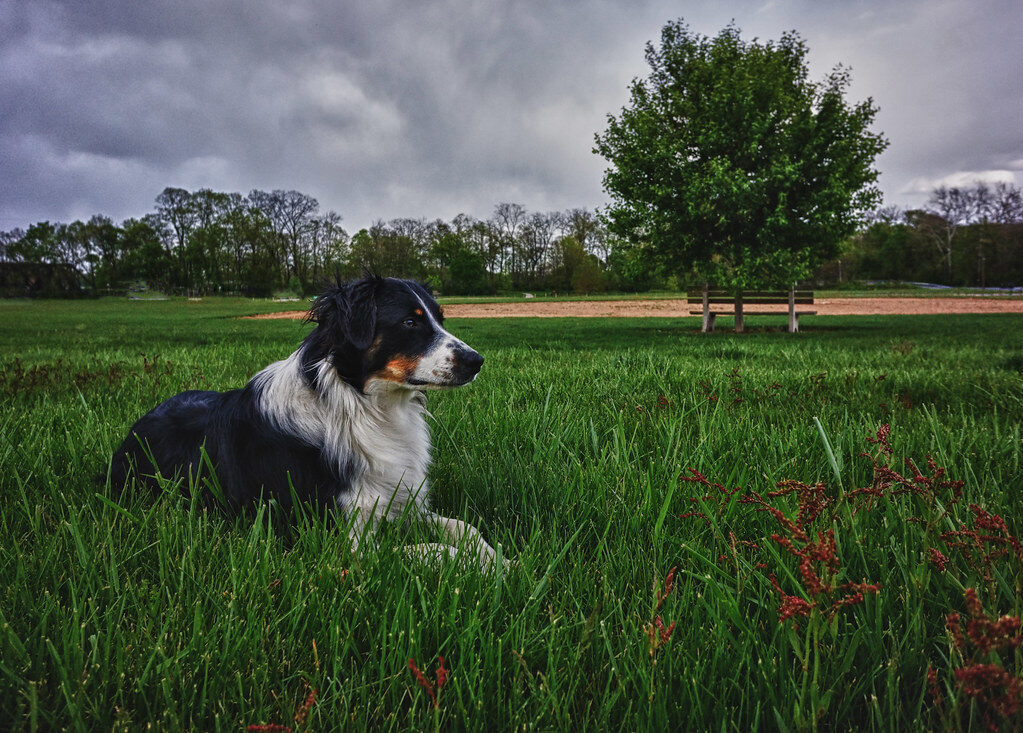
You may also want to consider visibility and lifestyle. For example:
- Active farm or outdoor setting: darker coats may hide dust and stains better
- Hot climates: coat color does not replace proper shade and hydration
- Family home: choose a color you enjoy seeing every day
Avoid choosing solely based on rarity. Dilute or uncommon shades can look appealing, but responsible breeding practices matter more than uniqueness.
In the end, pick a color you genuinely like while making health, temperament, and breeder ethics your top priorities.
Frequently Asked Questions about Australian Shepherd Colors
Australian Shepherds come in distinct base colors and recognizable patterns, including merle and tri combinations. Genetics shape everything from solid red coats to blue merle patches with copper and white trim.
What color variations can be found in Australian Shepherd puppies?
You will most often see four standard base colors: black, red (liver), blue merle, and red merle. Each of these can appear with white markings and copper (tan) points.
Puppies may be solid, bi-color, or tri-color. Some litters include dilute shades or minimal white, but breed standards typically focus on the four main color groups.
Because coat color depends on inherited genes, puppies from the same litter can look very different from one another.
How do red merle Australian Shepherds differ from other color varieties?
Red merle Australian Shepherds have a marbled pattern of lighter and darker red or cream shades over a liver base. The nose and eye rims are liver-colored rather than black.
You may also notice amber, blue, or green eyes, and some dogs have two different eye colors. Compared to blue merle, the overall tone looks warmer and brown-based instead of gray and black.
What is unique about the blue merle Australian Shepherd’s coat?
A blue merle coat features black patches over a gray or silver background. The pattern appears mottled or marbled rather than solid.
Many blue merles have white markings and copper points above the eyes, on the cheeks, chest, and legs. Some also have striking blue eyes or one blue and one brown eye.
The merle gene creates the broken, patchy appearance that sets this coat apart from solid black or red varieties.
Can Australian Shepherds have solid black coats, or are they always mixed with other colors?
You can find solid black Australian Shepherds, though many also include white markings or copper trim. Black is one of the four recognized base colors in the breed.
A black coat may appear as solid black, black and white (bi-color), or black tri with white and copper points. Completely black coats without any white or tan markings are less common but still possible.
What does the red tri coloration look like on an Australian Shepherd?
A red tri Australian Shepherd has a rich liver-colored base combined with white markings and copper points. The copper typically appears above the eyes, on the cheeks, chest, and legs.
The white often shows on the chest, muzzle, blaze, and paws. The overall effect looks warm and balanced, with clear contrast between the red, white, and tan areas.
Are there any common patterns seen in the tri-colored Australian Shepherd?
Tri-colored Australian Shepherds follow a consistent pattern: one base color, white trim, and copper points. You will usually see copper spots above the eyes and along the legs.
White commonly appears as a chest patch, facial blaze, collar, or socks. While placement varies from dog to dog, the three-color layout remains predictable and easy to recognize.